


The Premium Dermal Mart journal
Collagen Stimulator Injections for Treating Acne Scars
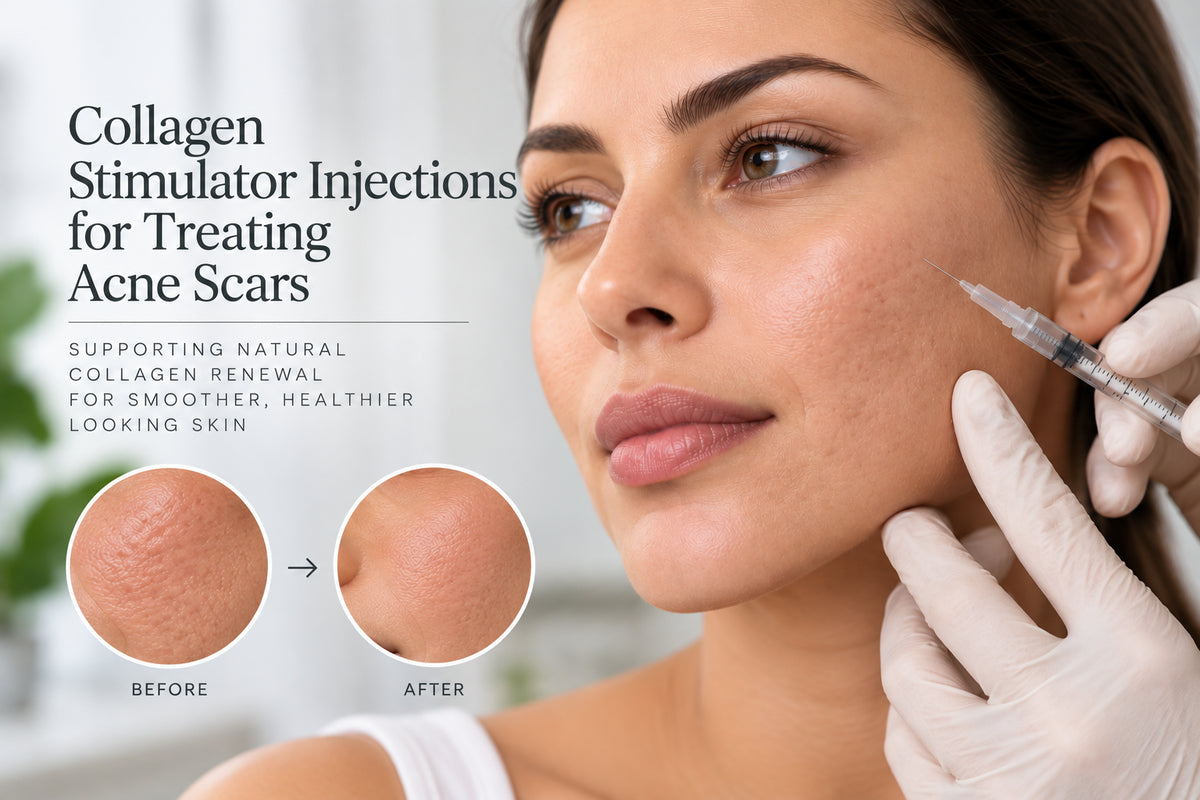
Collagen Stimulator Injections for Treating Acne Scars
Understanding Collagen Stimulator Injections for Acne Scars
Acne scars can remain visible long after active breakouts have disappeared. For some people, these scars are relatively shallow, while others develop deeper depressions that create noticeable changes in skin texture. Because acne scars can differ significantly in shape and depth, there is no single treatment that works equally well for everyone.
Collagen stimulator injections are one option that may be considered for selected types of depressed acne scarring. Rather than simply adding volume beneath a scar, these injectable treatments are designed to encourage the body to produce additional collagen within the treated tissues.
The resulting changes develop gradually and may help improve structural support beneath certain scars. Understanding how collagen stimulator injections work and what they can realistically achieve is essential before deciding whether they are appropriate for acne scar treatment.
Why Collagen Is Important for Acne Scarring
Collagen is a structural protein that helps provide strength and support within the skin.
When inflammatory acne damages deeper skin tissues, the body begins a natural repair process. Collagen plays an important role in this process.
If the healing response produces insufficient collagen, an area of skin may remain below the level of the surrounding tissue. This creates what is known as an atrophic acne scar.
The amount of collagen loss and the way the scar attaches to deeper tissues can influence its appearance.
This is why treatments that encourage collagen remodeling have become an important part of modern acne scar management.
What Are Collagen Stimulator Injections
Collagen stimulator injections are often described as biostimulatory injectables because they encourage a biological response within treated tissues.
Certain injectable products containing materials such as poly L lactic acid or calcium hydroxylapatite are associated with collagen stimulation.
Their approved uses and suitability for particular treatments vary depending on the product and country, so treatment should always be based on professional assessment.
Unlike a conventional filler that primarily provides immediate physical volume, a collagen stimulating injectable relies partly on the body's response to the injected material.
As new collagen gradually develops, improvements may become more noticeable over time.
How Collagen Stimulators Can Improve Acne Scars
Depressed acne scars create unevenness because portions of the skin sit lower than the surrounding surface.
Encouraging additional collagen formation may provide greater structural support within selected areas and help reduce the appearance of some depressions.
This can create smoother transitions across the skin and make shadows caused by uneven contours less noticeable.
However, collagen stimulators do not completely erase scars.
The goal is generally improvement rather than perfect skin. The degree of improvement depends on scar type, depth, skin characteristics, treatment technique, and individual biological response.
Which Acne Scars May Respond to Collagen Stimulation
Correctly identifying acne scar types is an important part of treatment planning.
Rolling Acne Scars
Rolling scars usually create broad depressions with relatively smooth edges. When several are present together, they can give the skin a wavy appearance.
Collagen based treatment approaches may be considered for some rolling scars.
However, these scars can sometimes be tethered to deeper tissues by fibrous attachments. If tethering is an important part of the problem, collagen stimulation alone may not provide sufficient correction.
Boxcar Acne Scars
Boxcar scars are wider depressions with more clearly defined edges.
Shallower boxcar scars may respond to treatments that encourage collagen remodeling, while deeper scars can be more challenging.
A combination of procedures may be recommended when different depths of boxcar scarring are present.
Ice Pick Acne Scars
Ice pick scars are narrow and extend deeply into the skin.
Their shape makes them considerably different from broad depressed scars. Collagen stimulator injections alone are generally unlikely to be the preferred approach for this type of scarring.
A dermatologist or other appropriately qualified healthcare professional can determine which treatments are better suited to these scars.
Collagen Stimulators and Traditional Dermal Fillers
Although collagen stimulators and traditional dermal fillers are both injectable treatments, their primary mechanisms can differ.
Hyaluronic acid dermal fillers provide physical volume immediately after placement. When used for appropriate depressed scars, the filler can help raise the depression closer to the surrounding skin.
Collagen stimulators work more gradually by encouraging a tissue response.
Neither treatment is automatically superior.
Traditional filler may be suitable when precise volume correction is needed beneath selected scars, while collagen stimulating treatments may be considered when broader improvement in structural support is desired.
The choice should depend on the characteristics of the patient's scarring.
Combining Collagen Stimulators With Subcision
Some depressed acne scars remain anchored to deeper tissue by fibrous bands.
In these cases, simply adding volume or stimulating collagen may not fully correct the depression because the scar remains physically pulled downward.
Subcision is a medical technique used to release selected attachments beneath tethered scars.
Depending on the individual treatment plan, injectable treatments may be considered alongside subcision to support the treated area.
Combination treatment should be carefully planned because the timing and suitability of each procedure can influence both recovery and results.
What Happens During Treatment
A collagen stimulator treatment should begin with a detailed skin assessment.
The practitioner will examine the scars, identify their types, evaluate their depth, and determine whether active acne is present.
Medical history, previous scar treatments, medications, allergies, and treatment goals should also be discussed.
If a collagen stimulating injectable is appropriate, the practitioner places the product within selected tissue layers using an injection technique suited to the treatment area and product.
Some treatment plans may involve more than one session.
The number of sessions required varies according to the product, severity of scarring, and individual response.
How Quickly Will Results Appear
Collagen stimulator injections generally require patience.
Temporary fullness or swelling may appear shortly after treatment, but this should not be confused with the final result.
The biological process of collagen formation takes time.
Changes may develop progressively over the weeks and months following treatment. This gradual response can be appealing to patients who prefer improvements that appear progressively rather than suddenly.
Individual results vary, and not every scar will respond to the same degree.
Treating Active Acne Before Acne Scars
Acne scar treatment should not be confused with active acne management.
Performing injectable procedures through areas of active inflammation or infection may be inappropriate.
Patients who continue to experience significant breakouts should discuss acne management with a dermatologist or another qualified healthcare professional.
Controlling active acne can reduce the likelihood of developing additional scars while existing scarring is being addressed.
Possible Side Effects and Risks
Temporary swelling, redness, tenderness, bruising, and discomfort can occur after collagen stimulator injections.
Depending on the product, technique, and individual response, lumps, nodules, or irregularities may also occur.
Injectable treatments can carry additional medical risks, including complications involving blood vessels.
Patients should receive clear information about potential side effects and warning signs before undergoing treatment.
Unexpected symptoms, severe or increasing pain, unusual changes in skin color, or other concerning reactions should receive prompt medical assessment.
Choosing a Qualified Practitioner
Successful acne scar treatment requires more than selecting an injectable product.
The practitioner must understand scar anatomy, skin characteristics, injection techniques, and the properties of the collagen stimulator being used.
An appropriately qualified healthcare professional should also recognize when injections are unlikely to provide the best result.
Patients should be cautious of promises that a single treatment can completely remove all acne scars.
A responsible treatment plan should focus on achievable improvement while maintaining skin health and patient safety.
Creating a Personalized Acne Scar Treatment Plan
Collagen stimulator injections for treating acne scars can provide a useful option for carefully selected patients, particularly when depressed scarring and loss of structural support contribute to uneven skin texture.
By encouraging the body's natural collagen response, these treatments may gradually soften selected depressions and improve the overall appearance of the skin.
They are not suitable for every scar.
Rolling scars, boxcar scars, ice pick scars, and tethered scars have different structural characteristics and may require different approaches. Some patients may benefit from collagen stimulation alone, while others may require subcision or additional treatments.
The most effective strategy begins with an accurate assessment of the scars and realistic expectations about what treatment can achieve. With appropriate patient selection, professional technique, and sufficient time for collagen remodeling, collagen stimulator injections can form a valuable part of a personalized approach to improving acne scarring.


Stocking up for your clinic?
Fillers, skin boosters, collagen stimulators and more, packed and shipped from South Korea.

